The Business Case for Switching to Biomass Pellets: ROI, Savings & Sustainability

TWMC
October 8, 2025
India’s rapid industrial expansion, urbanization, and rising energy demand have placed enormous pressure on its coal-based energy infrastructure. But recent years have exposed a glaring vulnerability: dependence on a depleting, imported, and polluting resource.
From power outages and supply shocks to price volatility, the coal crisis has triggered an urgent need for a reliable, scalable, and sustainable alternative.
This is where biomass fuel—specifically biomass pellets made from agricultural residue—enters as India’s most promising answer.
Despite being one of the largest producers of coal, India still imports over 20% of its coal requirement. Add to that:
Together, these factors have created energy insecurity and exposed India’s overdependence on coal for electricity, heating, and industrial use.
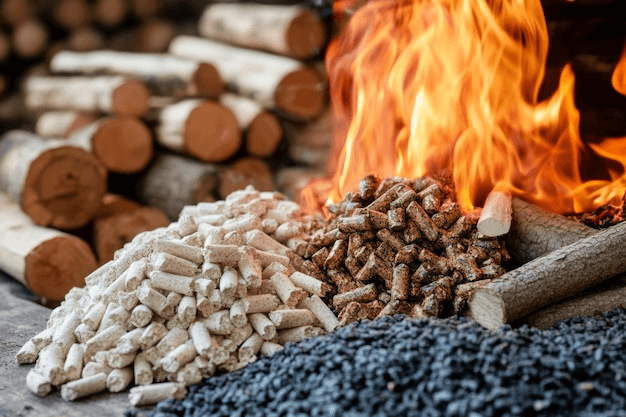
Biomass fuels are made from agricultural waste, forestry residues, and other organic matter that would otherwise be discarded or burned.
In India’s context, this means:
Instead of burning crop residue and causing air pollution, TWMC converts this waste into energy-dense pellets—providing a win-win solution for farmers, industries, and the environment.
Recognizing the opportunity, Indian policymakers have taken action:
This policy momentum is transforming biomass from a rural concept into an urban energy asset.
Criteria | Coal | Biomass Pellets (TWMC) |
Emissions | High CO₂, SOx, NOx | Low CO₂, Zero SOx |
Ash Content | 25–40% | Less than 5% |
Moisture | 10–15% | 7–10% |
Calorific Value | 3000–5000 kcal/kg | 3400–4200 kcal/kg |
Renewable | ❌ | ✅ |
Local Availability | Limited | Abundant (pan-India) |
Supply Volatility | High | Low |
Many Indian industries—particularly in textile, paper, FMCG, cement, and food processing—have already started transitioning to biomass fuels for:
TWMC has helped several clients cut their fuel costs by up to 20% while meeting ESG goals and green compliance.
TWMC (Transform Waste Management Company) is one of India’s leading biomass fuel innovators, offering:
We don’t just produce fuel—we build energy independence for Indian industries.
The coal crisis is a wake-up call. But it’s also an opportunity.
India has millions of tonnes of untapped agricultural waste that can power industries, reduce emissions, and boost rural incomes. Biomass fuel isn’t just an alternative—it’s India’s way forward.
With the right fuel partner like TWMC, the transition is simple, smart, and sustainable.